 FROM JEWELRY INDUSTRY CRISIS TO HOUSEHOLD GOLD MOBILIZATION
Recent events point to extraordinary volatility unfolding across Vietnam’s jewelry sector. Triggered by large-scale diamond smuggling investigations involving major industry players, these events have sparked a profound crisis of trust, fundamentally altering consumer behavior and capital allocation within the gold market. This turmoil happens at a time when policymakers are actively seeking strategies to financialize idle gold reserves held by households. Concurrently, innovative solutions introduced by prominent private conglomerates to capture these capital flows are expected to establish pioneering legal and risk management precedents, reshaping national capital flows in a new era.
The diamond market investigation and the collapse of trust in the jewelry industry
In early July 2026, the Investigative Police Agency of Thanh Hoa Province announced the bust of an exceptionally large transnational diamond smuggling that had operated with sophisticated methods since 2024. By 14/07/2026, the investigation expanded significantly with the prosecution of several prominent jewelry shop owners in Ho Chi Minh City, including Kim Ly, Ngoc Tam, and Ngoc Chau Au.
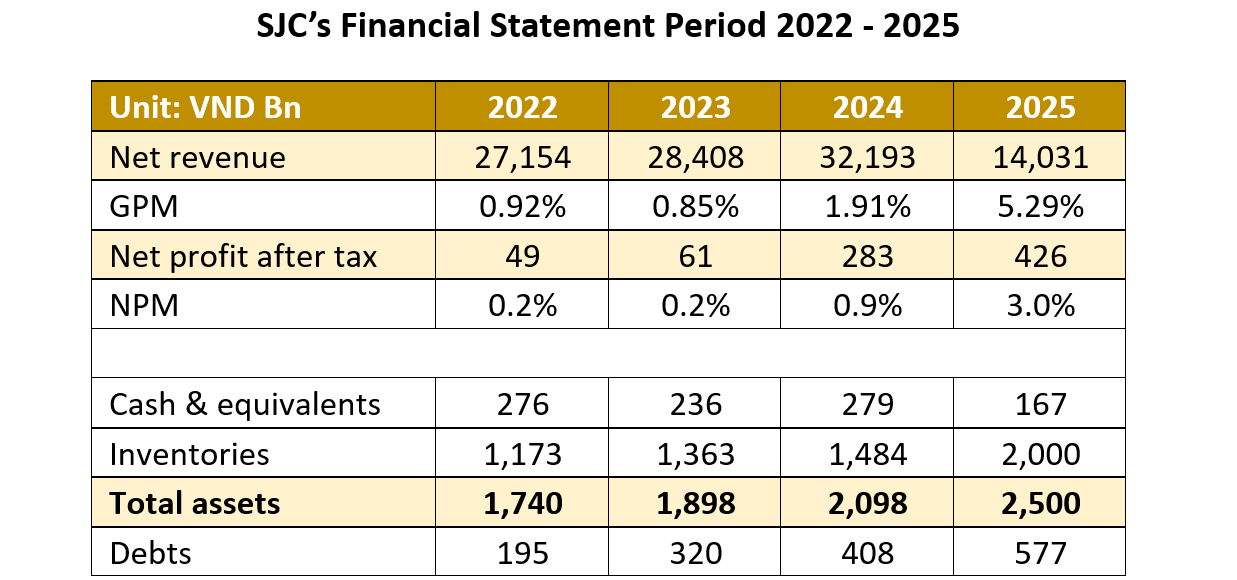
The fallout quickly extended beyond private merchants to impact state-backed enterprises. Authorities determined that Saigon Jewelry Company Limited (SJC) was implicated in illegal diamond imports channeled directly into its retail network. Based on SJC’s financial statements, the company’s inventory has risen rapidly since 2025 (+37.8% year-on-year), accompanied by a marked improvement in gross profit margins (5.29%) and net profit margins (3.0%). This revealed glaring vulnerabilities in SJC’s internal controls, as large volumes of smuggled goods easily bypassed verification, payment, and inventory intake protocols, severely shaking consumer confidence.
Specifically, the gravest industry concern emerged when investigators clarified Mr. Dang Ngoc Thao’s violation, former Director of PNJ Laboratory Company Limited (PNJ-Lab), a wholly owned subsidiary of Phu Nhuan Jewelry Joint Stock Company (PNJ). Mr. Thao was accused of leveraging PNJ-Lab’s prestige to erase international GIA laser inscription numbers on mis-specified smuggled diamonds, re-engraving new codes under PNJ-Lab’s system, and issuing fresh grading certificates to legitimize unverified stones for high-margin retail sale. The breach of trust at the market’s dominant grading unit severely compromised the reputational integrity of the entire industry.
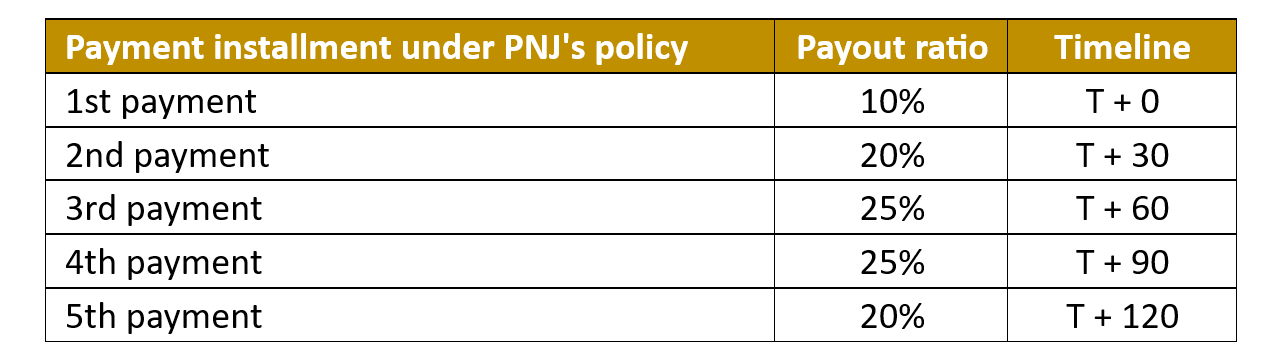
In response, widespread consumer panic erupted as buyers rushed to re-verify and re-grade their diamond jewelry. A massive wave of resales followed, driving PNJ’s buyback volume in July 2026 to surge to 5 times its retail sales. To protect its cash flow against rapid liquidity depletion, PNJ was forced to implement temporary operational measures by (1) extending buyback payment schedules up to 120 days for all gold and diamond resales nationwide, (2) restricting buyback trading hours to a 2-hour window in the afternoon and (3) encouraging customers to exchange diamonds for physical gold products to obtain immediate assets rather than waiting for cash payouts.
These policies reflect severe liquidity shortage and represent a cash preservation strategy under current market pressure.
Negative psychological impact and the domino effect on gold market
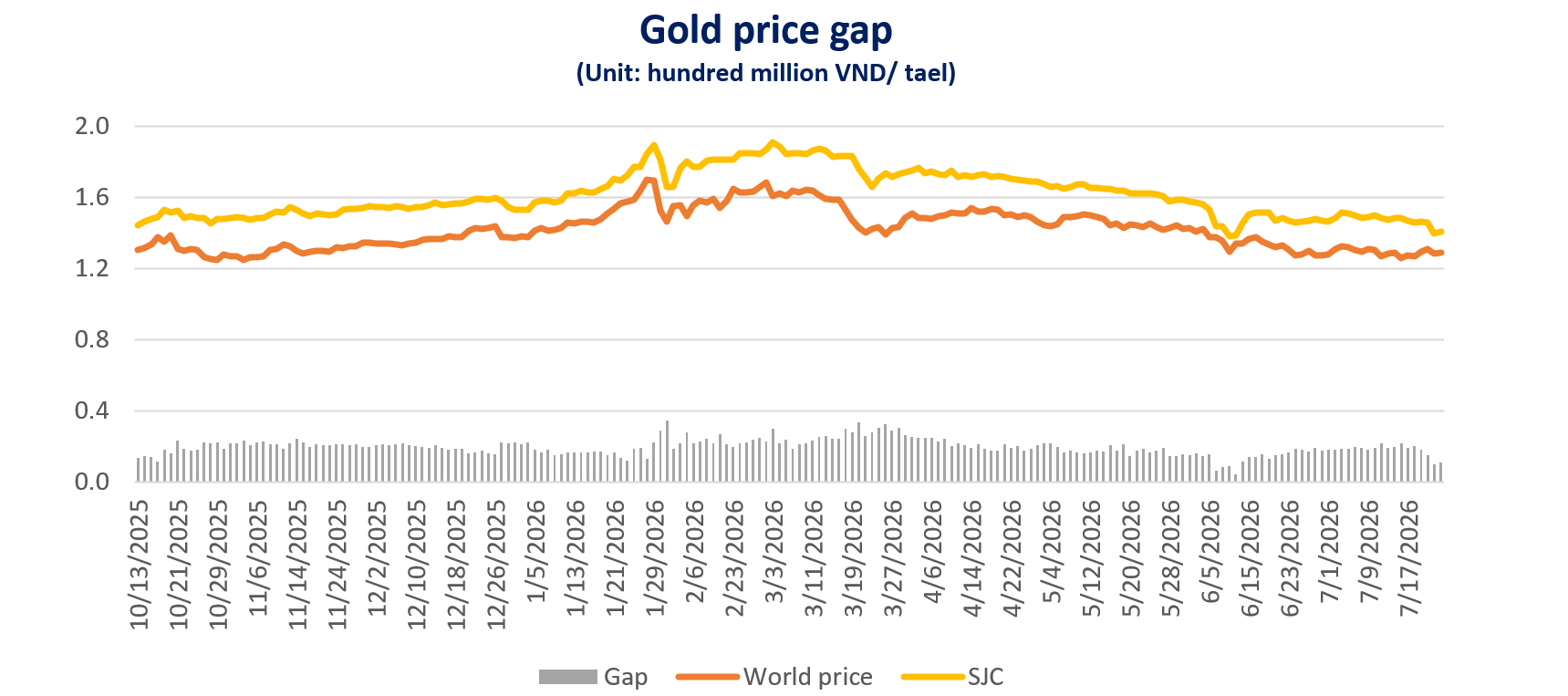
Panic in the diamond segment swiftly spilt over into the gold market as household gold selling escalated sharply. Consumers quickly recognized that liquidity across precious metal assets could be freezed when dealers face regulatory scrutiny and cash flow constraints. Major gold retailers, including SJC and DOJI, proactively lowered buyback quotes for PNJ-branded gold products. Overall, domestic gold prices faced rapid short-term downward pressure, significantly narrowing the premium gap relative to international spot gold.
Current systemic liquidity shortage
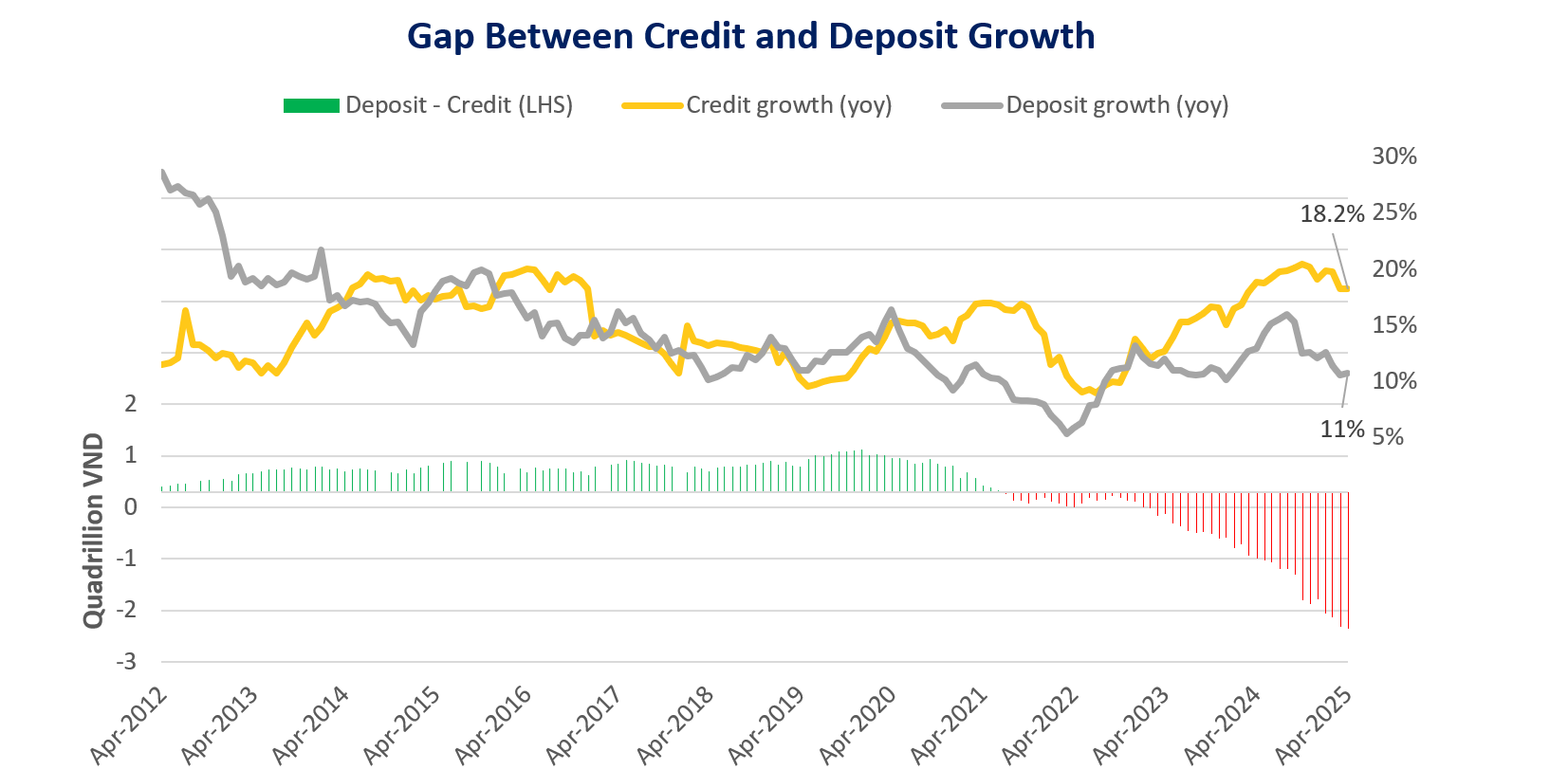
Macroeconomic indicators from the State Bank of Vietnam (SBV) in the first half of 2026 signaled the onset of a new monetary tightening cycle. The banking system’s Loan-to-Deposit Ratio (LDR) surged to 1.16x, marking an all-time historical high. The underlying cause was a rapid rebound in credit disbursement contrasted with sluggish household deposit growth. This structural mismatch compelled commercial banks to raise deposit interest rates to compete for capital and meet regulatory liquidity coverage requirements.
Proposals for mobilizing household gold reserves
Monetary liquidity constraints and the pressure to maintain elevated deposit rates created a challenging backdrop for economic managers. In response, National Assembly deputies introduced strategic proposals aimed at unlocking the massive volume of static assets held privately by the public.
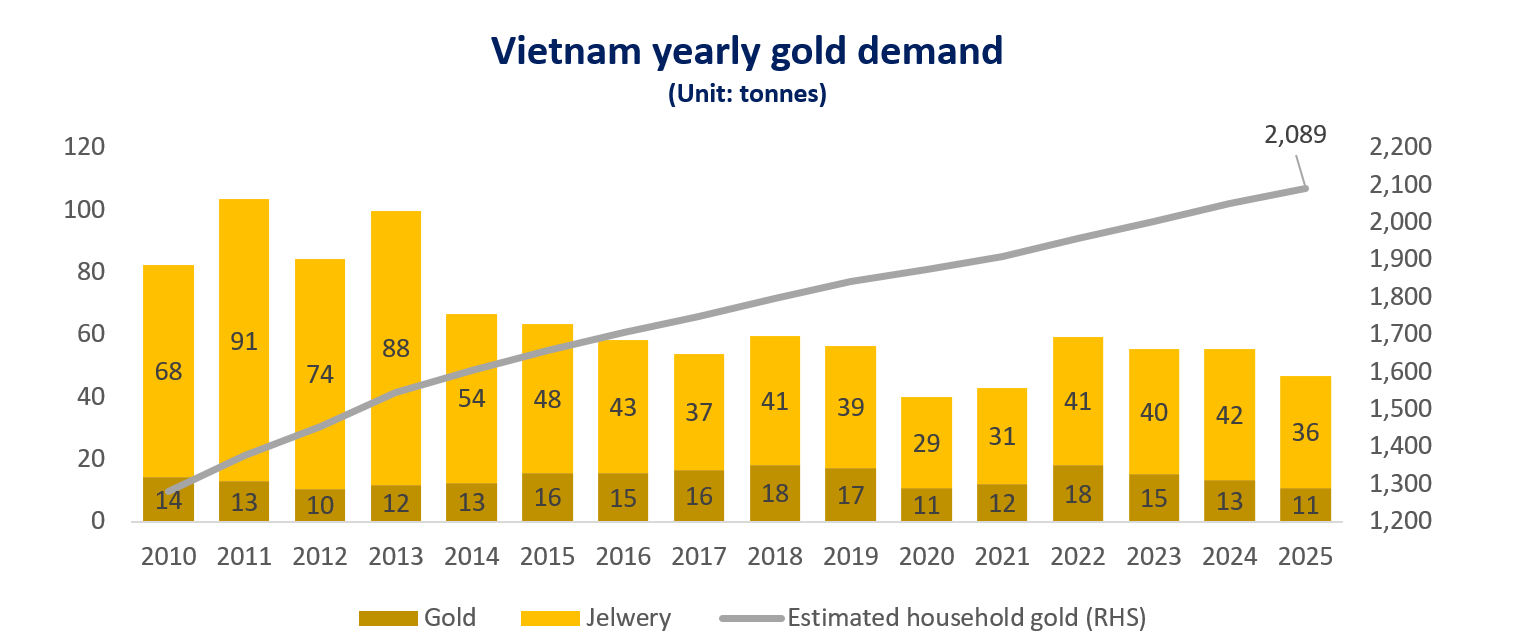
According to World Gold Council estimates, annual gold demand in Vietnam averages approximately 55 tonnes per year, reflecting deep-seated consumer demand for gold as a store of value. Current estimates indicate that Vietnamese households hold approximately 2,000 tonnes of gold worth roughly $263bn (equivalent to nearly 50% of national GDP). Successfully mobilizing a portion of these holdings would supply essential mid/ long-term capital for macroeconomic infrastructure projects and digital transformation without increasing public debt.
In late 2025, several key ideas to financialize gold resources has been proposed:
Gold market stabilization: Narrowing the domestic-international price differential to below 5 million VND/tael within 6 to 12 months, suppressing speculation, and expanding supply via controlled imports.
Gold depository certificates and gold bonds: Allowing citizens to deposit physical gold into national vaults in exchange for depository certificates or gold-backed bonds, earning yields tied to international gold price movements or preferential VND interest rates.
Establishment of a national gold exchange: Creating a centralized, transparent trading venue to convert static wealth into active, productive liquidity for the economy.
Gold-to-VND conversion incentives: Offering zero storage fees, preferential interest rates, or dedicated gold-denominated government bonds for individuals converting physical gold into local currency.
However, gold mobilization without rigorous safeguards risks would lead to goldifying the economy, undermining the Vietnamese Dong (VND), and impairing the SBV’s monetary policy tools.
Vinhomes’ “Gold-for-Home” policy: A Breakthrough in mobilization
Prior to the July 2026 systemic liquidity crunch and jewelry sector inspections, Vinhomes JSC released a strategic preemptive move. On 25/05/2026, Vinhomes officially launched a program enabling buyers to convert gold to purchase real estate under a 5-year committed framework.
Key points of the conversion policy:
Vinhomes’ framework allows buyers to convert idle gold into cash through authorized partner bullion dealers to settle 50% to 80% of a property’s purchase price. The policy’s primary draw lies in its guaranteed return structure and flexible maturity choices after 3 or 5 years:
Property retention option: If real estate markets appreciate, buyers retain ownership, benefiting from property value growth and rental income.
Asset redemption option: If buyers decide not to retain the property, Vinhomes guarantees to repurchase the unit and return 100% of the initial gold-converted cash value plus a fixed yield of 2% per annum (yielding 106% of the original gold value at 3 years, or 110% at 5 years). The repurchase settlement is indexed to prevailing gold prices at maturity, preserving the asset’s gold-equivalent purchasing power.
Investment implications:
The sequence of events spanning diamond smuggling prosecutions and retail jewelry liquidity strains to systemic banking tightness and Vinhomes’ real estate conversion model provides a clear narrative on contemporary capital movements in Vietnam.
Over the mid to long term, these dynamics may accelerate a structural re-allocation of capital across Vietnam’s financial system:
Transition from informal to formal assets: Heightened anti-money laundering enforcement and strict invoice auditing by the Ministry of Industry and Trade will shrink informal capital tied up in illicit diamonds or undocumented gold bullion. This capital will increasingly move into formal banking channels via high-yield certificates of deposit or structured real estate co-investments managed by major corporations.
Modernization of the gold regulatory framework: Macroeconomic requirements and corporate-led innovations will pressure the State Bank of Vietnam to expedite amendments to Decree 24/2012 toward greater institutional flexibility. Controlled financialization through pilot gold certificates or bank – corporate bullion management partnerships will be essential to curb unmonetized gold hoarding while unlocking vital private capital for sustainable economic expansion.
Vo Hoang Long – Investment Department, PHFM1