EDUCATION
1. What is an Exchange-traded fund?
An Exchange-Traded Fund (ETF) is a type of investment fund that holds a basket of assets such as stocks, bonds or other securities. ETFs are traded on stock exchanges, so they can be bought and sold during market hours just like regular shares.
Instead of buying individual stocks one by one, investors can buy one ETF unit and have fractional ownership of an entire portfolio – which may include dozens to hundreds of companies at once. ETFs allow investors to diversify their portfolios at a low cost, with high liquidity and easy real-time trading.
2. Popular Types of ETFs
🔸 Index ETFs
This is the most common type. An index ETF tracks a specific market index – such as VN30, VN100 or the S&P 500 – replicating its holdings proportionally by market capitalisation.
🔸 Bond ETFs
Instead of equities, the portfolio holds government or corporate bonds. Bond ETFs are commonly used to balance a portfolio and reduce risk during periods of high stock market volatility.
🔸 Industry or sector ETFs
Focus on a specific industry – for example banking, healthcare, technology or energy. This is suitable when you have a clear view on a sector but do not want to pick individual stocks within it.
3. How to Buy and Sell ETFs?
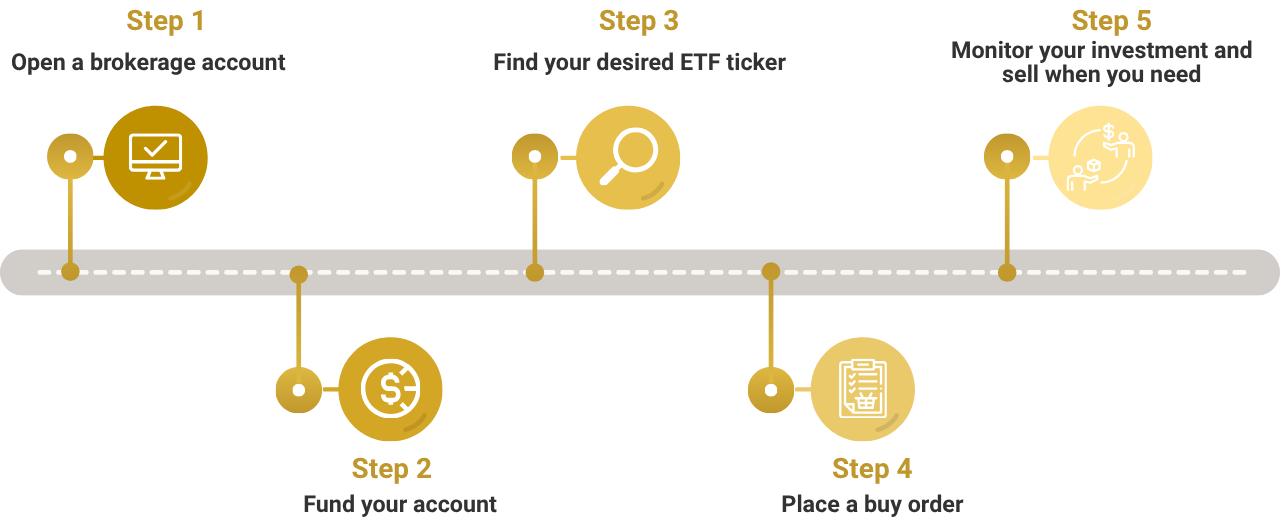
🔸 Step 1: Open a Brokerage Account
If you do not have a brokerage account yet, this is your first step. To trade ETFs listed on the Ho Chi Minh Stock Exchange (HSX) or the Hanoi Stock Exchange (HNX), you must open an account with a licensed member securities company.
🔸 Step 2: Deposit Funds into Your Account
Once your account is active, you need to transfer money from your bank account into your brokerage account before you can place any orders.
🔸 Step 3: Search for the Desired ETF Ticker
Every ETF has its own unique ticker code on the exchange, just like a stock. You can search for it by name or ticker in your broker’s trading website or app.
🔸 Step 4: Place a Buy Order
This is where you actually buy the ETF. The process is identical to placing a stock order. In your trading app, select the ETF ticker, enter your bid price and the quantity you wish to purchase, then complete the payment and confirm the transaction.
🔸 Step 5: Monitor Your Investment and Sell When Needed
Once you’ve bought your ETF, you don’t need to monitor fluctuations every day. Instead, investors should perform periodic checks to ensure the fund still aligns with their financial goals, asset allocation and risk tolerance. ETFs are built for medium to long-term investing, which helps mitigate short-term risks.
When you wish to withdraw capital or rebalance your portfolio, the selling process is exactly the same as buying – simply place a sell order on your trading app.
4. What are the fees for ETFs?
One of the most attractive things about ETFs is their low cost. But “low” doesn’t mean free – understanding the fee structure means no surprises.
🔸 Management Fee:
An annual fee charged by the fund management company to manage the investment portfolio. This fee for ETFs in Vietnam is typically below 0.8% per year.
🔸 Trading Fee:
This is the fee you pay to your brokerage firm when buying or selling ETFs on the exchange, similar to trading ordinary stocks.
5. What are the risks of ETFs?
While ETFs are designed to mitigate the risks compared to investing in individual stocks, they are still subject to market volatility and do not completely eliminate investment risk.
Market Risk
- When the overall stock market falls, ETFs fall too – though typically less than individual stocks due to diversification. This risk cannot be fully avoided in any equity investment.
Tracking Error
- The differences between the ETF’s actual return and the index it aims to replicate. Caused by transaction costs, management fees or imperfect portfolio replication. High quality ETFs keep tracking error very low.
Liquidity Risk
- Some ETFs trade infrequently, making it hard to buy or sell at your desired price. Choosing ETFs with high daily trading volume significantly reduces this risk.
Fund Closure Risk
- In rare cases, an ETF may be closed if its asset base becomes too small. Investors receive their money back at NAV – you don’t lose everything but the timing may not be ideal for you.
6. Why Is ETF Market Price Different from NAV?
This is one of the most common questions from new ETF investors and once you understand it, it becomes a useful tool rather than a source of confusion.
🔸 What is NAV?
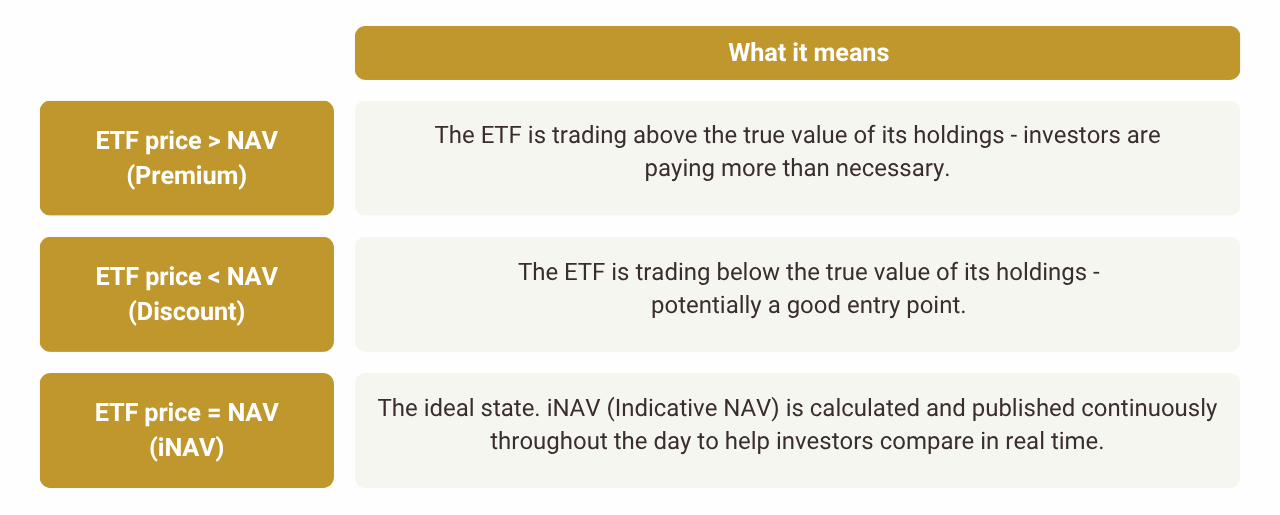
NAV (Net Asset Value) is the true underlying value of one ETF unit, calculated by dividing the total value of all stocks in the portfolio by the number of units outstanding. NAV is published at the end of each trading day.
🔸 Why Does Market Price Differ from NAV?
During the trading day, the ETF’s price on the exchange moves continuously with supply and demand – just like a stock. This can create a gap versus NAV:
Practical Tip:
Before placing a buy order, check the iNAV and compare it to the current market price. If the market price is significantly above the iNAV (premium), consider waiting for prices to move closer to NAV.
7. What Is the Difference Between SMART-BETA ETFs and Traditional ETFs?
If you already understand ETFs, think of Smart Beta as the next generation of ETFs. While traditional index ETFs buy stocks by market capitalization – which inadvertently creates a buy-high trap – Smart Beta ETFs take a more strategic approach. They intelligently screen and selects assets based on specific financial criteria – such as dividend yield, cash flow quality, debt levels or growth momentum.
Common Smart Beta Factors
Smart Beta ETFs typically build their portfolio around one or more factors that have been researched and validated over time:
🔸 Value: Selecting stocks trading below their intrinsic value.
🔸Quality: Companies with sustainable profits, low debt and strong cash flows.
🔸 Dividend Yield: Companies with high and consistent cash dividend payouts.
🔸 Low Volatility: Stocks that move less than the broader market – better defence in downturns.
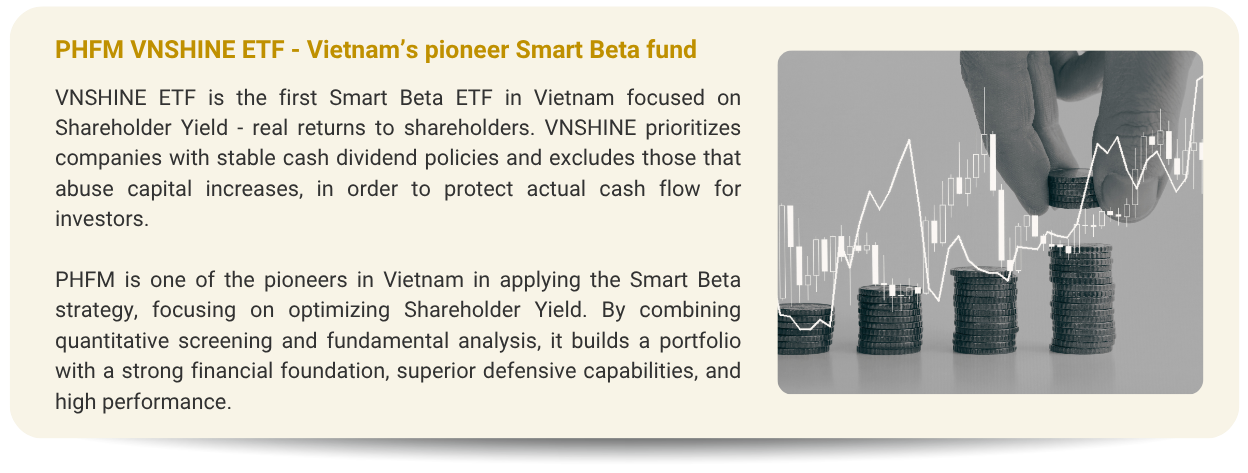
🔸Shareholder Yield: Combining cash dividends, low dilution and debt reduction. This is the strategy behind the PHFM VNSHINE ETF.