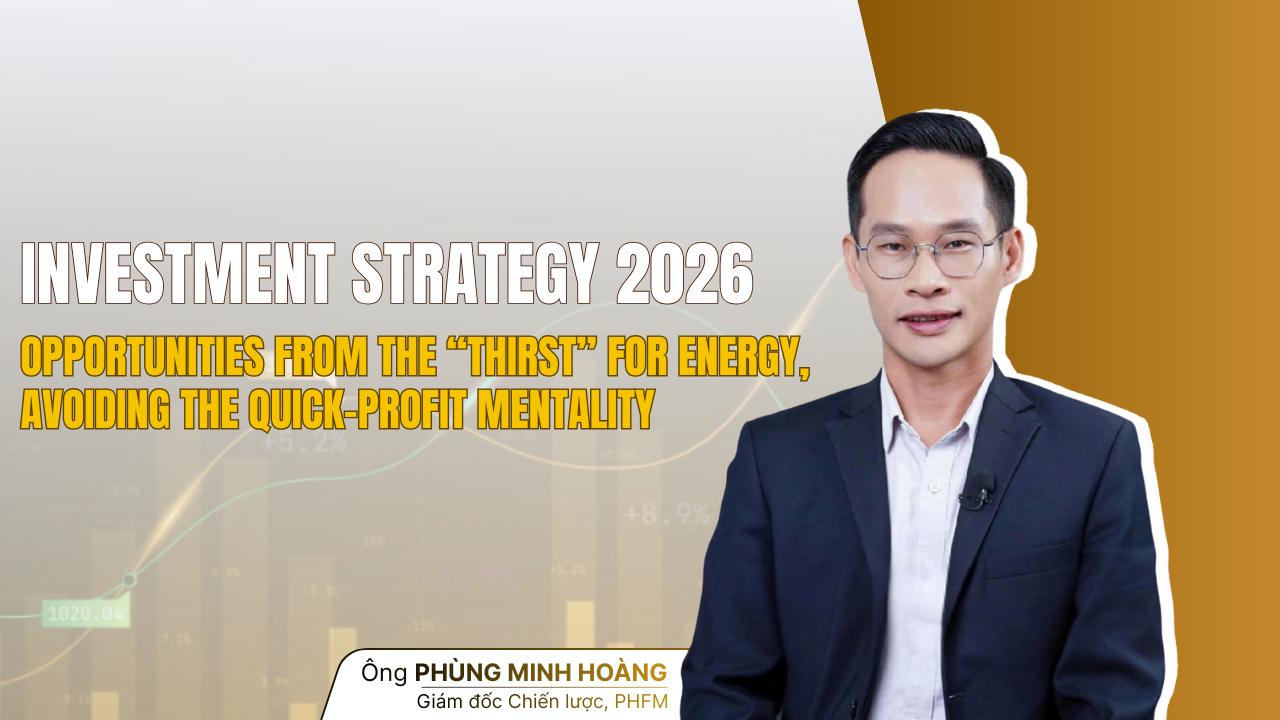
Assessing the market outlook for 2026, Mr. Phung Minh Hoang – Strategy Director at Phu Hung Fund Management JSC (PHFM) – believes that the growth drivers will not come solely from the market-upgrade narrative, but rather from the underlying strength of sectors benefiting from energy infrastructure development and public investment. The expert also analyzes the profit landscape across sectors, the “de-dollarization” trend and its impact on gold prices, and offers risk-management recommendations to help investors avoid being trapped in low-liquidity assets.
The infrastructure and energy sectors will benefit
What is your assessment of the 2026 stock market outlook, and which sectors have the potential to break out?
Beyond expectations of foreign inflows entering the market after an upgrade, the core factor enabling the market to achieve a higher and more sustainable valuation ultimately comes down to long-term earnings growth potential.
The sectors with the most potential in 2026 are those positioned to benefit from a wave of public investment and infrastructure construction, including building materials, power generation, and energy infrastructure. These have already begun to show positive signs as legal bottlenecks for some long-stalled infrastructure projects have been resolved, allowing them to complete.
In addition, the Government’s approval of the largest infrastructure investment plan to date will effectively turn Vietnam into a massive construction site. This will drive strong demand for construction materials such as stone, cement, steel, etc., helping these businesses grow revenue and potentially address issues related to overcapacity in certain industries, such as cement.
New technology trends such as AI and electric vehicles will require enormous amounts of electricity, placing pressure on the power generation system as well as transmission and energy storage. Legal obstacles related to power projects, power trading mechanisms, and the master planning framework have been gradually eased. As a result, PHFM believes the energy sector and power infrastructure will benefit this year.
Real estate market maintains recovery momentum
Is the real estate market in 2026 expected to enter a new cycle, or will it remain in a correction phase? Which segment will stand out?
The real estate market in 2026 is expected to continue the recovery momentum seen in 2025, supported by government policies. Real estate companies are also taking advantage of the recovery to restart older projects, reduce inventory, and rebalance leverage ratios.
New legal regulations are being amended in a more supportive direction to accelerate site clearance, speed up administrative procedures, shorten investment timelines, and bring new supply to market sooner. In addition, the Government has issued and plans to issue various social housing policies to increase affordable housing supply, thereby helping to curb overheating home price increases beyond people’s affordability. The social housing segment and the mid-range-and-below segment are expected to be improved due to government support, although profit margins in these projects are not high.
How attractive do you find the corporate bond channel in 2026?
The bond market has passed its most difficult phase and is recovering quite well. In 2025, total corporate bond issuance reached nearly VND 589 trillion, up 24.7% yoy. Bank and real estate bonds accounted for nearly 90% of issuance value and over 80% of the total outstanding corporate bond value.
From an investor perspective, the corporate bond channel still lacks appeal due to limited product diversity (across sectors). In addition, yields on bank bonds are not particularly attractive, while real estate bonds still carry significant risks due to sector characteristics—investors often find it hard to forecast corporate cash flows and project-related legal risks.

(Source: Vietstock.vn)
Silver might not be suitable for long-term investment
How do you forecast the attractiveness of gold in 2026 compared with other investment channels?
The economic environment next year is favorable for holding gold. The US dollar and real interest rates (nominal interest rates minus inflation) are the primary factors influencing gold prices. As recent inflation data has come in lower than expected, the US still has room to cut interest rates next year. Meanwhile, the likelihood of a significant appreciation of the US dollar next year is relatively low; it is expected to fluctuate within its current range, with downside appearing more limited than upside. We believe there has been a structural shift in the rationale for investing in gold. Beyond hedging against financial market and war risks, de‑dollarization and hedging against fiat currency inflation have emerged as new sources of demand. With increasing unpredictability in US policies and stance, confidence in the US dollar has weakened. We observe certain countries taking steps toward de‑dollarization, replacing dollar holdings with gold. Additionally, as people recognize that governments continue to print money, currencies are losing value, creating a need to hold gold to preserve wealth. This has evolved into a long‑term “strategic allocation.
The main demand for gold comes from jewelry, emerging‑market central banks, and gold‑tracking ETF investments. Historically, whether central banks increase their holdings has been an important factor affecting gold prices, and this factor is expected to remain supportive next year. Recently, demand has also been supplemented by entities like Tether, the company issuing the USDT stablecoin, as even the digital finance sector begins to diversify its assets. Furthermore, China is currently facing an “asset shortage,” meaning a lack of high‑return assets for investment. Previously, Chinese insurance institutions allocated part of their funds to real estate, but with China’s property market now in a bear phase, these institutions have begun increasing their gold holdings. Therefore, demand‑side factors are indeed positive for gold.
(Source: Vietstock.vn)
Can silver compete with gold, given that its gain over the past year exceeded gold’s?
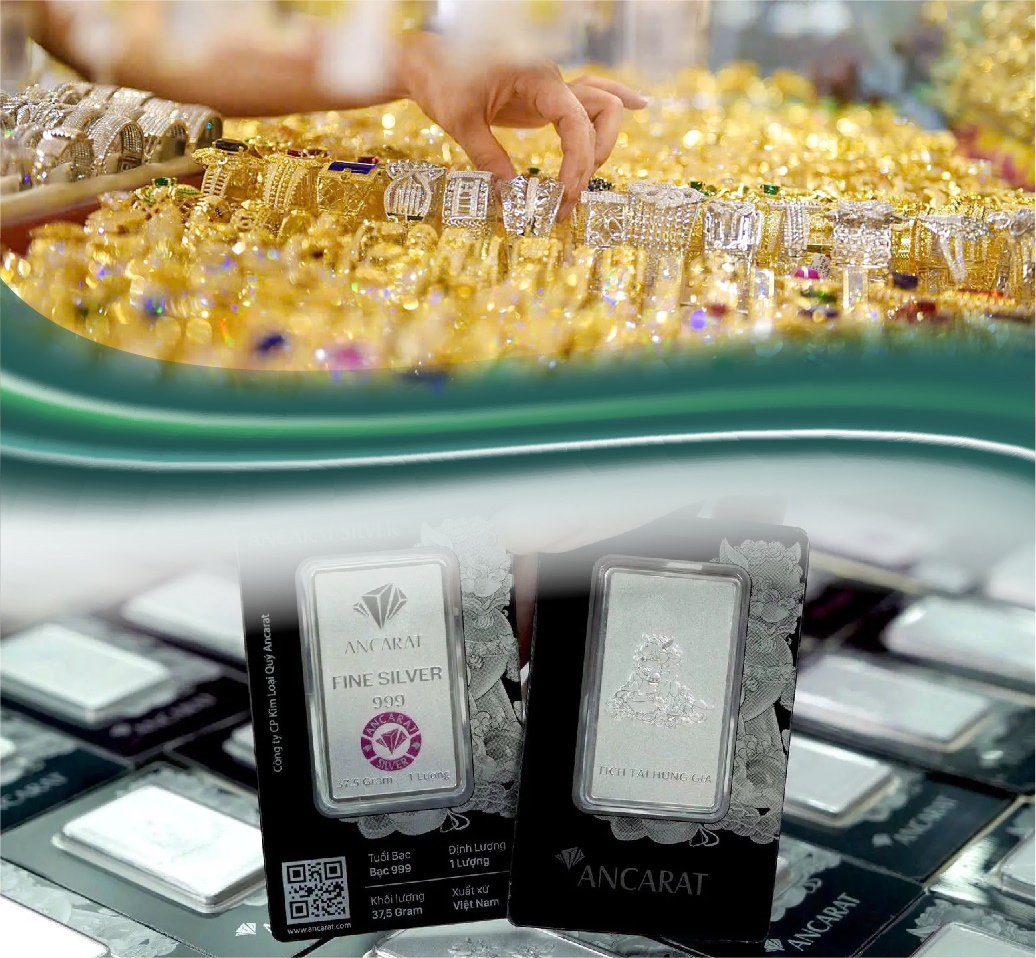
Silver, like gold, is a precious metal, so its price exhibits some correlation with gold. This year’s rise in silver prices can also be seen as a catch‑up rally. Silver has the highest electrical conductivity among metals and is widely used in solar panels, electric vehicles, medical devices, and electronic products. Unlike gold, silver is difficult to recycle: although it can be recovered, the silver content in industrial products is minimal, making recovery costs often exceed the value of the silver itself. Thus, supply is constrained. From a pure supply‑and‑demand perspective, silver indeed has room to appreciate. According to The Silver Institute, the silver market has been in a supply deficit for four to five consecutive years.
Another key difference is that gold is a “stock,” while silver is a “consumable.” Gold is chemically stable—it does not rust or corrode. Nearly all of the gold ever mined is held in central bank vaults, turned into jewelry, or stored privately. However, it is important to note that gold’s potential supply is enormous (existing stockpile); if the price is high enough, anyone’s gold holdings can instantly become “supply.”
Silver’s price movements are far more volatile and speculative compared to gold. The silver market is less than one‑tenth the size of the gold market, and smaller markets are more susceptible to price manipulation by large players. Gold is primarily driven by its “monetary attributes,” influenced by macro factors such as interest rates, geopolitical tensions, and the US dollar. Silver possesses both monetary and industrial attributes, making its drivers more complex.
PHFM recommend that investors consider allocating a portion of their funds to gold on dips. However, silver’s price behavior makes it challenging as a long‑term investment target. Even with favorable fundamentals, its complex investment logic and striking drawdowns tend to exceed the risk tolerance of most ordinary investors.
Looking across asset classes, which channel offers the best return/risk profile in 2026?
A sustainable portfolio should include a combination of asset classes such as equities, fixed income, and commodities. Although gold has delivered better risk-adjusted performance in recent years, experience in developed markets shows that equities remain the asset class with the highest long-term returns. However, because equities carry higher risk than bonds and deposits, we recommend that investors build a balanced portfolio combining equities, bonds, and gold. Adding other asset groups helps diversify risks and reduces reliance on equity market volatility.
Investors should not put all capital in a single asset class, nor rely solely on bank deposits. Deposits function like a savings tool with limited growth potential. As Vietnam’s economy continues to develop and mature further, long-term interest rates are likely to decline. Only portfolios with a balance between growth assets and defensive assets can generate stable returns for investors.
Real estate is not suitable as a stand-alone investment channel due to low liquidity and high sensitivity to policy changes. Unlike equities, excessively rising housing prices can create serious social consequences. If all assets are “locked” in real estate, investors may find it difficult to convert to cash when the economy deteriorates sharply, while equities still allow quicker liquidation when needed.

(Source: Vietstock.vn)
Avoiding the quick-profit mentality from the market
What should businesses prepare for in the 2026 economic context?
For businesses, while central banks globally and in Vietnam are still trying to keep interest rates low to support growth, governments are now shifting toward stronger fiscal policies as monetary policy has less room to maneuver.
Bond yields have been edging higher, reflecting rising demand for medium- and long-term capital. Higher capital costs mean businesses should be more cautious and think carefully before each investment decision in order to maximize shareholder value.
From a financial perspective, in some cases, listed companies may be better off returning profits to shareholders via cash dividends or share buybacks rather than stubbornly expanding investments that generate a return on invested capital (ROIC) lower than the cost of capital.
And what about individual investors?
Retail investors should view stock investing as a way to preserve and grow wealth sustainably over the long term. Avoid a “short-term” mindset and chasing quick profits.
Be cautious about using excessive leverage, and use asset diversification to reduce idiosyncratic risks tied to individual stocks. Capital flows will remain selective in 2026, meaning not every stock will enjoy broad market gains—investors will need the ability to select stocks and manage risk.
If investors lack the skills to pick stocks or simply don’t have time to follow the market closely, seeking support from professionals or using discretionary investment services can deliver significant benefits, allowing people to focus on what they do best.
Compiled content from Vietstock.vn