
VIETNAM RIDE-HAILING MARKET:
COMPETITION SHIFTS TOWARD EFFICIENCY MANAGEMENT
The revenue-sharing for each ride
Recently, fares, fees, and the amount drivers actually receive from Grab have become a major focus of debate. On social media, some drivers have called for coordinated app shutdowns to protest current policies, arguing that their income has declined while they still have to bear fuel, maintenance, and vehicle depreciation costs themselves.
According to Reuters, some drivers said that total platform deductions could, in certain cases, amount to as much as 50% of the ride value. The remaining gross earnings are only around VND2,600 per km for motorcycles and VND6,000 per km for cars, before fuel, maintenance, and depreciation. Drivers’ actual net income is then further affected by taxes, insurance, platform fees, incentives, and supply-demand-based pricing.
In practice, the ride-hailing business model must balance three competing interests: passengers, drivers, and the company’s own profitability. If passenger fares are too low, drivers may find the economics unsustainable and leave the platform, resulting in a shortage of available drivers. However, if fares are too high, passengers may switch to competing apps. Grab therefore needs to balance all three interests rather than simply adjusting its platform fee rate.
Grab’s pricing advantage is gradually narrowing
The debate over driver earnings has become more significant as Grab no longer holds an overwhelmingly dominant competitive position in Vietnam. Passengers now have more alternatives following the emergence of other ride-hailing platforms. As a result, any policy change that increases the effective fare paid by passengers or reduces the number of active drivers could quickly translate into market-share risk.
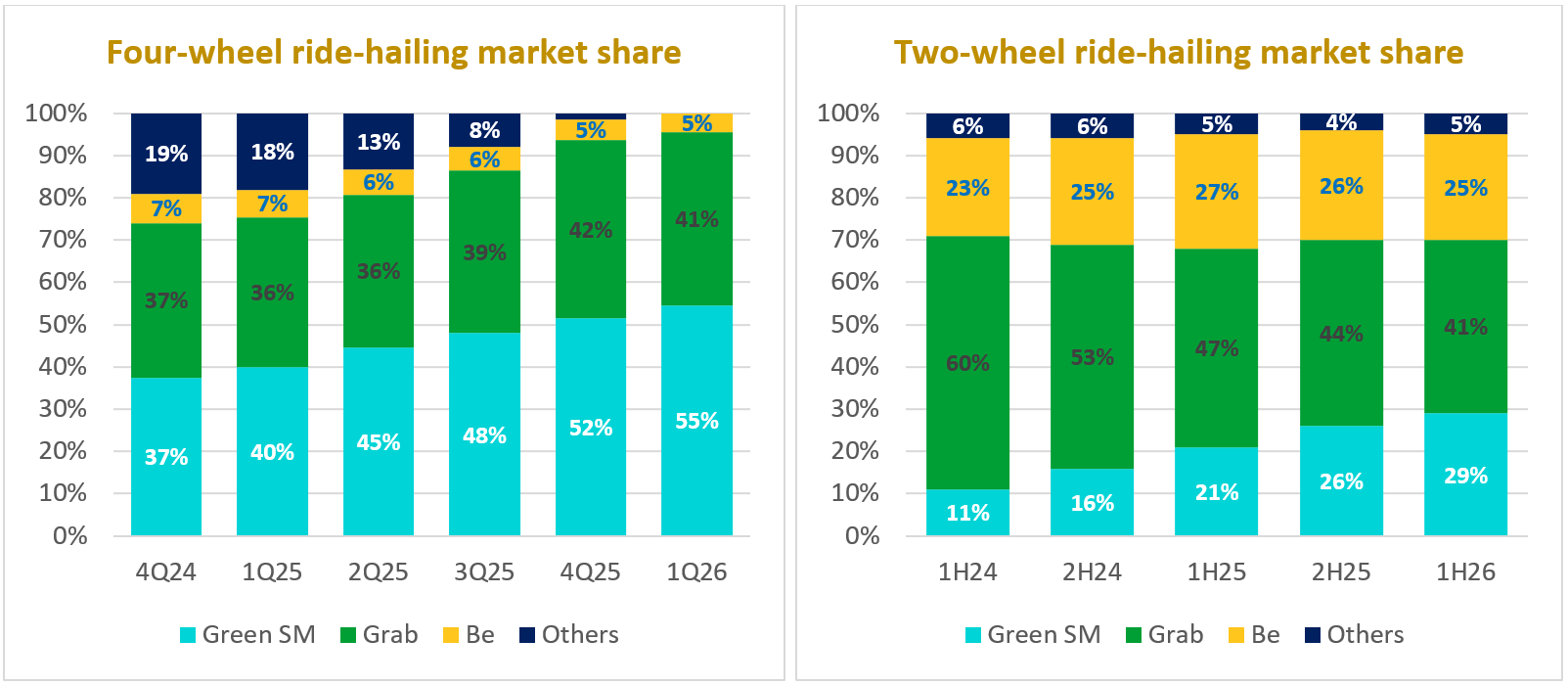
Just three years after its 2023 launch, Green SM has reached sufficient scale to challenge the dominant position that Grab spent more than a decade building in Vietnam. Competitive pressure has weakened Grab’s pricing power, making it more difficult for the company to pass rising costs on to either passengers or drivers.
The current competitive environment shows that ride-hailing platforms need to solve the economics of each ride through cost optimization and stronger operating efficiency.
Grab has shifted its focus toward profitable growth
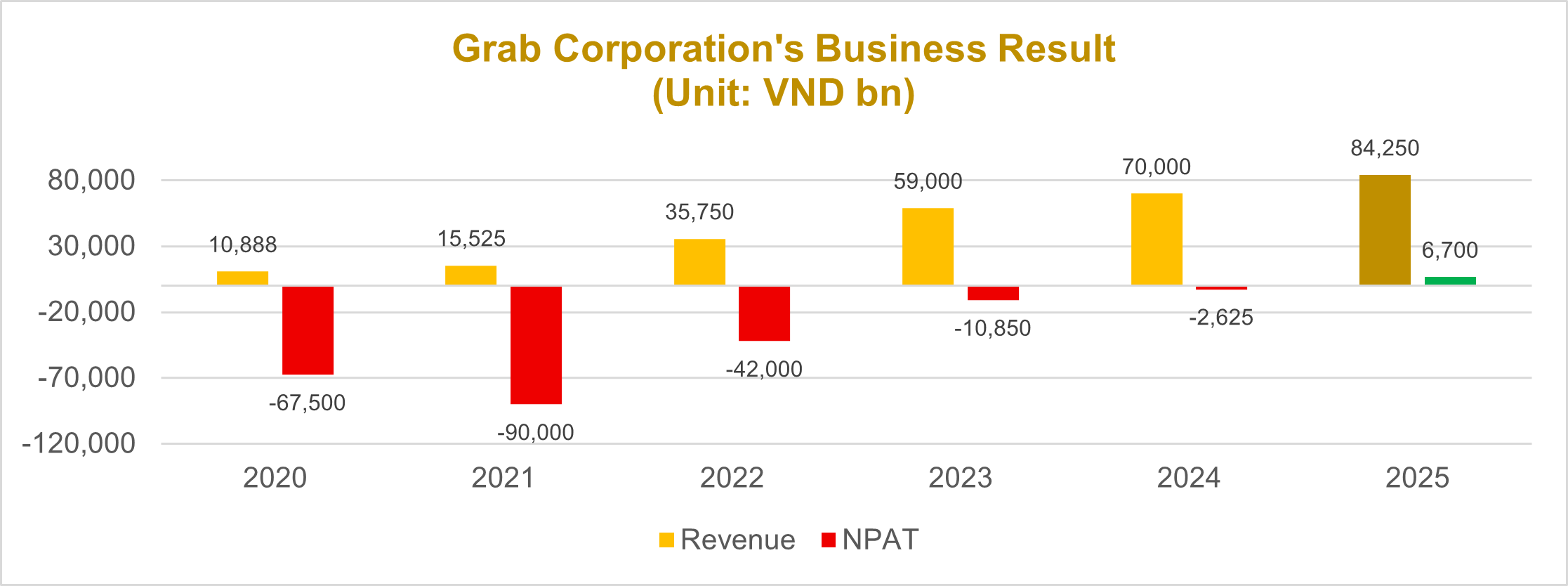
Grab’s group-level results indicate a greater focus on profitability and cash flow than in the past. Its strategic shift from growth at all costs toward profitable growth has fundamentally changed the way it competes in Vietnam.
Grab now needs to balance three objectives: (1) Keeping fares competitive for passengers, (2) Ensuring adequate net income for drivers, and (3) Protecting the platform’s profit margin. With less room to rely on its own capital to subsidize fares, every adjustment to fares or platform fees now creates a more direct trade-off against profitability.
Grab’s available options
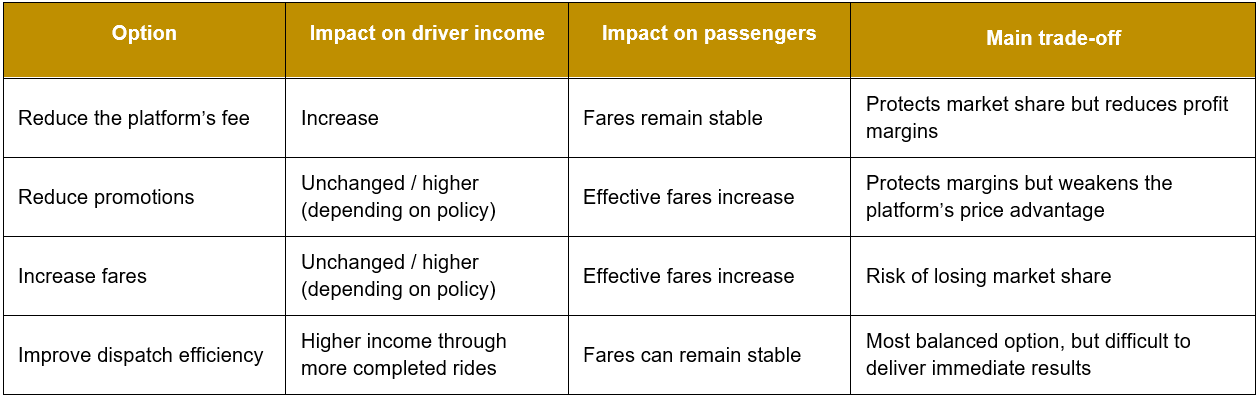
Under the increasing competitive pressure, Grab faces difficult trade-offs. Reducing its platform fee would directly erode margins, while increasing fares or cutting promotions would weaken its competitive position. Improving optimization and dispatch efficiency, rather than directly intervening in pricing, may therefore be the most appropriate strategy. Grab could optimize its algorithms to increase the number of completed rides per driver per hour. Partner-driver earnings would improve through higher utilization, allowing Grab to protect both profitability and price competitiveness. However, this technology-driven approach depends heavily on network density and requires time before its benefits can be fully realized.
The National Competition Commission’s scrutiny is not merely an issue of information transparency, it could also result in changes to Grab’s fee policies. If regulators introduce measures to cap platform deductions in order to protect driver welfare, Grab could face a significant disadvantage. Given the pressure to maintain consolidated profitability at the group level, Grab may have limited room to absorb the resulting decline in profit itself. The most feasible response could therefore be to pass part of the cost on to passengers through higher effective fares.
However, such a move would be risky under current market conditions. Higher fares would weaken Grab’s competitive position against Green SM, which has greater pricing flexibility due to the lower operating costs of electric vehicles. In other words, regulatory pressure could become a catalyst forcing Grab to raise prices, potentially allowing its domestic competitor to gain further competitive advantages.
Green SM’s cost advantage comes with capital pressure
In the domestic market, Green SM currently benefits from a significant cost advantage because the energy and maintenance costs of electric vehicles are materially lower than those of conventional vehicles. Integration with Vingroup’s ecosystem, including charging infrastructure and vehicles, also creates a closed-loop service model that traditional ride-hailing platforms may find difficult to replicate.
At the same time, the Government’s plan requiring taxi electrification from 2030 under Decision 876 gives Green SM a first-mover advantage, turning the green transition into a competitive advantage over other operators. Green SM’s attractive revenue-sharing policy is also a psychological anchor for drivers, placing direct pressure on the partner networks of competing platforms.
However, Green SM’s business model also faces a substantial capital requirement. Although it benefits from lower operating expenses such as electricity and maintenance, the company must make significant upfront investments in vehicle purchases while also bearing vehicle depreciation over time. Its ability to continue expanding its fleet while keeping fares competitive depends heavily on Vingroup’s financial status, particularly as the parent group must also manage a substantial debt burden. To reduce this financial pressure, Green SM is gradually moving toward a hybrid model in which partners can invest in their own vehicles and join the platform, rather than requiring the company to purchase the entire fleet itself.
An overview of industry competition
In the short term, Green SM holds a significant advantage through its fleet scale, lower operating costs, and attractive fares. If Grab is forced to raise fares or reduce promotional programs in order to improve driver earnings, Green SM’s pricing advantage could become even stronger. Grab could then face greater difficulty retaining passengers while indirectly creating more room for Green SM to expand its market share.
Despite bunch of pressure, Grab still benefits from a dense network, flexible pricing across different service segments, and substantial financial resources at the group level that can support targeted promotional campaigns. The key point will therefore be how much profit margin Grab is willing to sacrifice in order to defend its market share in Vietnam.
Investment implication
The asset-light business model is beginning to reveal its limitations. In the past, software-based ride-hailing platforms such as Grab commanded high valuations because they could scale rapidly without owning vehicles. However, the current environment highlights some of the limitations of this model. Complete reliance on partner-owned vehicles gives the platform less ability to influence the underlying operating cost structure, reducing its pricing flexibility when market conditions change.
The impact on green vehicle market: Green SM is not only a taxi operator but also a major customer of VinFast. Large-scale EV purchases by Green SM help VinFast maintain production scale, improve factory capacity utilization, and reach production breakeven more quickly. At the same time, the ride-hailing network functions as a paid test-drive channel that can help encourage conversion toward privately owned electric vehicles. However, growth in ride-hailing market share and internal electrical vehicle sales must be sufficiently large and rapid to offset the financial leverage, cost of capital, and substantial depreciation burden across the ecosystem.
The strategic value of charging infrastructure: Competition among ride-hailing platforms is acting as a catalyst for the electrification of urban transportation. As the number of both commercial and personal owned electric vehicles increases, charging infrastructure is likely to become a key bottleneck for the industry. Operators that control proprietary charging networks would therefore hold a significant competitive advantage and create a substantial barrier to entry for new competitors seeking to enter the market.
Vo Hoang Long – Investment Department, PHFM