VIETNAM GETS ITS FIRST ETF BUILT ON A SHAREHOLDER YIELD STRATEGY
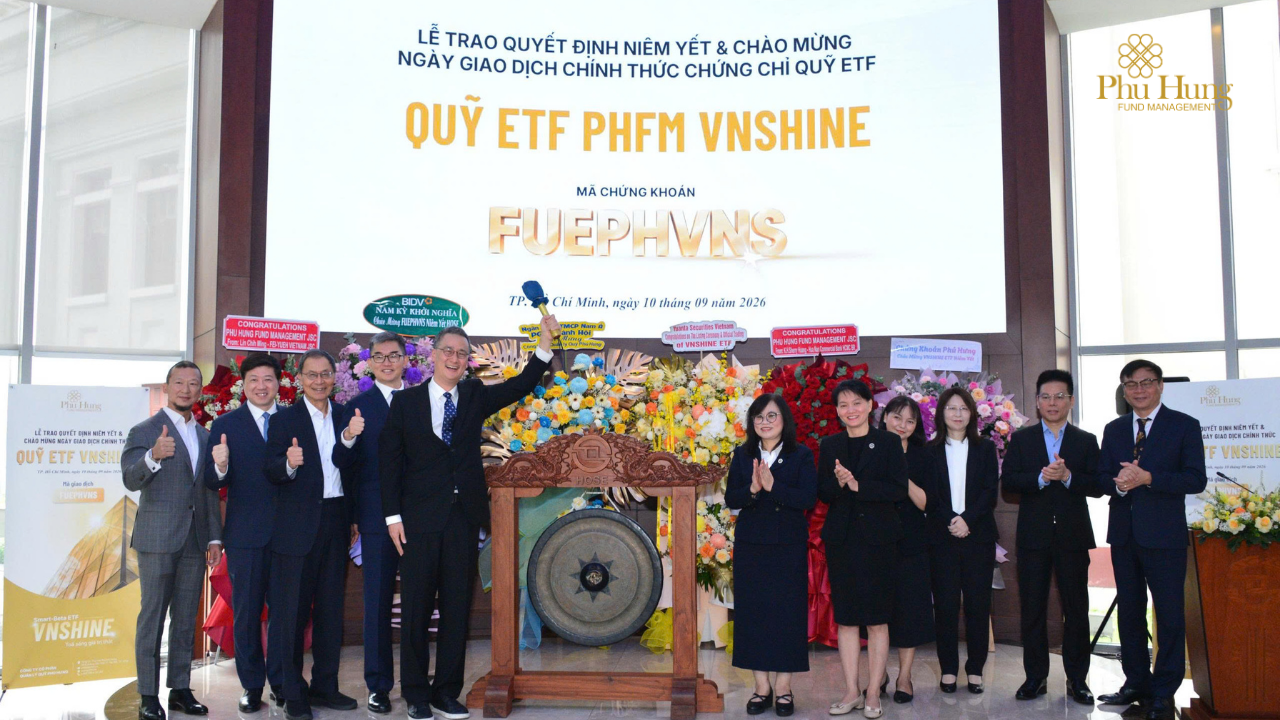
On September 10, 2026, the PHFM VNSHINE ETF (fund certificate code: FUEPHVNS), managed by Phu Hung Fund Management Joint Stock Company (PHFM), officially had its first trading session on the Ho Chi Minh City Stock Exchange (HOSE). It is the first exchange-traded fund in Vietnam built on the principle of Shareholder Yield.

The fund tracks the VNSHINE Index – the Vietnam Shareholder Interest Enhanced Index — an index series issued by HOSE on November 18, 2025. The first trading session closed out the fund’s initial public offering (IPO), which raised a total of VND 266 billion.
A Smart-Beta Strategy Focused on Shareholder Yield
Most ETFs currently operating in Vietnam allocate weight based on market capitalization. This approach causes capital to flow more heavily into stocks that have already risen in price, which increases portfolio concentration whenever the market moves.
The VNSHINE Index takes a different approach: evaluating companies based on their ability to return real value to shareholders. The index rules screen companies against three criteria:
- Continuous cash dividend payments for the three consecutive years prior to the review year
- No excessive use of capital-raising share issuances that dilute existing shareholders’ interests
- A trend of declining net debt, which lowers interest expenses and expands room for future cash returns.
The final portfolio consists of 15–30 stocks selected from the VNAllshare basket, with a minimum liquidity requirement of over VND 10 billion in daily trading value. The fund operates under a transparent, rules-based quantitative framework, with automatic screening and periodic rebalancing, combined with fundamental analysis in portfolio management.
Prioritizing Cash Flow Quality
According to PHFM’s analysis, as many as 41% of listed stocks in Vietnam show a discrepancy of more than 1% between pre-audit and post-audit EPS, stemming from differences in the application of accounting standards. By contrast, cash-flow line items — dividends paid, debt repaid, and shares bought back — are more transparent and harder to manipulate.
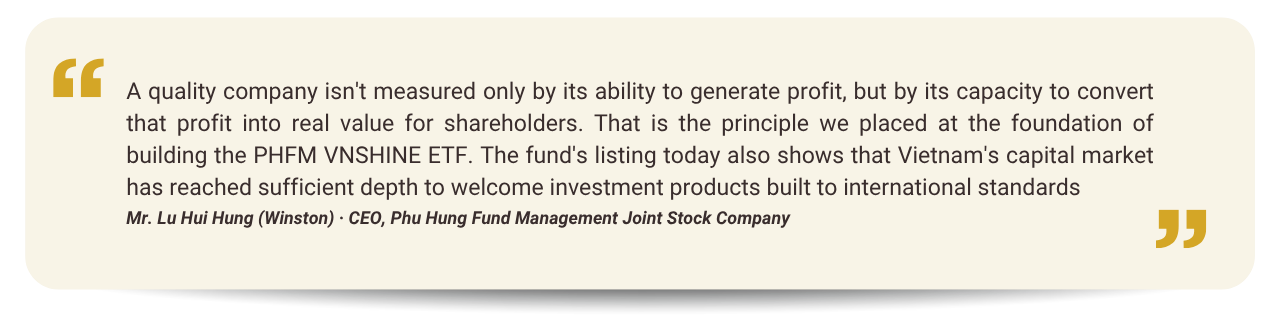
By making cash flow the central measure, the fund filters out noise from financial statement figures and aims for a more defensive portfolio that prioritizes cash-flow quality over size or price momentum.
PHFM